Banner: National Oceanic and 
Atmospheric Administration - Hydrometeorology Testbed Program

Hydrometeorological Testbed Program

Contacts

HMT Management Council

OAR Research Partners

NWS Partners

NESDIS Partner

Documents


Hosted at:
The NOAA/ESRL Physical Sciences Division
http://www.esrl.noaa.gov/psd

Webmaster | Disclaimer | Privacy Policy

HMT News

2009  |  2008  |  2007 |  2006

ESRL Briefs Seattle WFO on Mobile Atmospheric River Monitoring System

November 4, 2009

NOAA Earth System Research Laboratory (ESRL) scientists Paul Neiman and Allen White joined Dave Reynolds, Meteorologist in Charge (MIC) of the NOAA National Weather Service (NWS) San Francisco Weather Forecast Office (WFO), for a visit to the NWS Seattle WFO on October 23, 2009, to discuss how ESRL research tools also may be used to assist with forecasting winter extreme precipitation events. Brad Colman, Seattle MIC, first led a discussion about the Howard Hanson Dam, a topic receiving regional and national attention in the past several months due to safety issues identified by the U.S. Army Corps of Engineers. Seattle WFO staff provided an overview of the physical conditions of the dam, repairs being made by the U.S. Army Corp of Engineers, dam operating procedures that will be used this winter, geography of the Green River Basin, and potential flood risks. ESRL scientists and Mr. Reynolds followed this discussion with lessons learned from more than a decade of research into winter storms and flooding in California that had its genesis in a research field program carried out during the El Niño of 1997-1998. Mr. Neiman explained the role of Atmospheric Rivers (ARs), narrow corridors of enhanced water vapor transport associated with winter storms, in producing floods. Dr. White described the NOAA research-quality Mobile Atmospheric River Monitoring System (MARMS) recently deployed on the Washington Coast at Westport, and showed some of the first real-time observations MARMS has collected. Mr. Reynolds then described how research observations from MARMS could be used by forecasters to monitor AR conditions and help calibrate weather prediction models and to improve situational awareness of forecasters in his office; using the recent early season record-breaking storm in California as an example.

ESRL scientists have been studying winter storms impacting the U.S. West Coast since 1998 as part of a larger effort to understand the role of climate variability and change on coastal extreme events. They have developed collaborative working relationships with staff at several Weather Forecast Offices and two regional River Forecast Centers. These interactions have facilitated the prototyping of promising research results into the hands of operational forecasters. The most recent collaborative project being evaluated by forecasters is the Coastal Atmospheric River Monitoring and Early Warning System (CARMEWS). This tool combines several key research results from ESRL's (PSD and GSD) work in California into a single time-height display that is updated hourly on the Internet. The display allows forecasters to monitor the atmospheric forcing associated with ARs and to evaluate the performance of a weather forecast model’s prediction of that forcing. The tool has been used since 2008 at a few sites in California and is now available from the MARMS deployed on the coast of Washington.

This meeting was a key step in establishing a collaborative effort between ESRL researchers and NWS operational forecasters in Washington in order to address common goals of protecting lives and property from flooding, to advance mission-oriented research on extreme precipitation, and to educate the public about the hazards associated with West Coast Winter storms.


Handout describing Atmospheric River Monitoring and Early Warning System Flux Tool

New Mobile Atmospheric River Observations Deployed on the Washington Coast

October 28, 2009

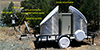
The NOAA Earth System Research Laboratory (ESRL) is deploying a newly developed Mobile Atmospheric River Monitoring System (MARMS) to Westport, Washington, roughly 250 km upwind of the Cascade foothills, in a data poor area. MARMS, a form of an "Atmospheric River Observatory" (ARO) will monitor the wind speed, direction, snow level and water vapor content in real-time above the earth's surface to help researchers better understand Atmospheric Rivers; the phenomenon that fuels potentially dangerous winter storms on the West Coast of the U.S. Data from MARMS will begin flowing to researchers and others, such as the Seattle Weather Forecast Office starting November 1, 2009, via the Internet. This deployment is an extension of NOAA's HMT program and ESRL's weather and climate/water cycle research already being performed in California. The Westport deployment is a first step in assessing the role of ARs in flooding in the Pacific Northwest, and the potential of new observing capabilities. Another component that will support this effort is ESRL's Reforecast Model. This model is a compilation of historical observations and their corresponding 2-day forecasts, which are rerun using today's current forecasting model (i.e., reforecasts). The reforecasts represent an additional tool for anticipating heavy precipitation and is being evaluated in the context of the AR phenomenon.

Atmospheric Rivers are the regions of ocean storms where high winds and water vapor are concentrated. These factors combine to produce heavy rainfall upon landfall, especially over mountainous terrain. Most flooding events in the several watersheds studied thus far on the West Coast in winter are associated with the landfall of AR conditions. ARs are visible in satellite images over the oceans, but their impact over land is not captured well by NOAA's current operational observing system. Each AR monitoring station includes a Doppler wind profiler for measuring wind profiles and snow level, and a Global Positioning System receiver for measuring the column-integrated water vapor concentration. The Water Vapor Flux Tool uses these measurements to calculate the horizontal transport or flux of water vapor and correlates this to rainfall in the mountains.

From four years of winter storm observations along the coast of central California, NOAA has developed scientifically based AR thresholds for water vapor content and upslope wind speed, which identify an AR event. Deployment of MARMS in Westport will allow researchers to evaluate whether these thresholds can be applied to the Washington coast. Real-time data and tools from MARMS can be used to evaluate model forecasts as storms strike the coast. Together with the Reforecast Model, these tools will give researchers and forecasters more insight into winter storms and associated heavy precipitation.


The Mobile Atmospheric River Monitoring System (MARMS) close to completion in Erie, CO (Photo credit: Barb DeLuisi)

Installation at the Westport, WA field site in October (Photo credit: Clark King, NOAA)

Upper CO River Basin Soil Moisture Observing Station is Up & Running

October 20, 2009

On October 2, 2009 the first of two NOAA Earth System Research Laboratory (ESRL) soil moisture observing stations planned for the Upper Colorado River Basin became operational. The Granby, Colorado observing station is located at the Granby Airport. Currently, soil moisture and temperature at depths of 5, 10, 20, 50 and 100 cm along with wind speed, wind direction, surface temperature, surface relative humidity, snow depth, and precipitation are being observed.

The observations will be used to support research and operational needs for soil moisture and surface flux observations. Partners include the NOAA Hydrometeorological Testbed (HMT) Program, the National Integrated Drought Information Service (NIDIS) and the National Weather Service (NWS) Colorado River Basin Forecast Center (CBRFC).

The Granby site was chosen specifically to monitor snow depth and snowpack losses caused by sublimation. ESRL plans to augment the Granby location with instrumentation that will measure surface sensible, latent, radiative and ground heat fluxes in the spring of 2010. Another similar observing site will be deployed near Gunnison, CO during the summer of 2010.


Map showing locations of CO River Basin soil moisture observing stations.

Bob Zamora of ESRL installs the soil moisture observing system. (Photo credit: Clark King, NOAA)

HMT–DTC Collaborative Effort

August 24, 2009

The NOAA Hydrometeorology Testbed (HMT) Program and the Weather Research and Forecasting (WRF) Developmental Testbed Center (DTC) have established a collaborative effort that addresses several important topics that are fundamental areas of concern for both testbeds as they work towards the transfer of new research results into NOAA operational forecasting capabilities. Specifically, this joint activity addresses four areas: (1) implementation and demonstration of new verification capabilities for high resolution numerical weather prediction (NWP) forecasts, (2) initial development of DTC capabilities for high resolution ensemble prediction, (3) data impact studies (e.g., data denial), and (4) evaluation of the impacts of model physics and parameterizations on NWP forecasts that are relevant to the HMT. Regular meetings between the two groups began in late July and have become weekly to prepare for the HMT-West 2009-2010 season. In particular, areas (1) and (2) and their application in the HMT-West domain have become primary focal points such that a demonstration of the HMT/WRF/DTC collaborative effort can be in place for the 1 December 2009 HMT-West start.

For more information contact: Ellen.Sukovich@noaa.gov


HMT Meets with San Francisco Exploratorium Staff

August 17, 2009

On August 3, 2009, HMT researchers met with staff from the San Francisco Exploratorium during their visit to the Earth System Research Laboratory in Boulder, CO. The visitors were introduced to the concept of Atmospheric Rivers, briefed on the HMT program, and given a lab tour of related equipment, data, and products. The Exploratorium is San Francisco-based science center that is considered a world-wide leader and innovator in the field of informal science education. They conduct research in how to translate and communicate scientific results and the process of science, and then share their findings on their best practices with the rest of the museum community.

NOAA and the Exploratorium signed a 5-year MOU in June 2009 describing a multi-faceted and in-depth collaboration between the two institutions. Many enthusiastic ideas for collaboration were discussed and a follow up meeting between HMT and Exploratorium personnel is slated for September in San Francisco.


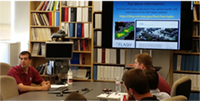
Marty Ralph gives a demonstration to visitors from the the San Francisco Exploratorium. Photo credit: Barb DeLuisi, NOAA

Atmospheric Rivers and our National Parks in the West

July 30, 2009

HMT collaborator Jessica Lundquist, and her co-author James Roche, have published an article in Park Science entitled, "Climate change and water supply in western parks." The article talks about how important atmospheric rivers are to flooding in the western U.S. mountain parks and how this might increase in a warmer future. It also explores the ramifications of potentially wetter winters, drier summers and the implications of this for park management in the West. Park Science is a "research and resource management bulletin of the U.S. National Park Service that reports the implications of recent and ongoing natural and social science and related cultural research for park planning, management, and policy."

To read the full article, visit: http://www.nature.nps.gov/ParkScience/index.cfm?ArticleID=285&Page=2


Photo credit: James Roche, NPS

HMT-SE Research Planning Workshop

July 29, 2009

The second of two HMT Southeast planning workshops was held on June 15-17, 2009 in Chapel Hill, NC: the HMT-SE Research Planning Workshop. This workshop built on the findings from the first workshop, held in February 2009, which identified hydrometeorological and operational requirements and gaps for this region. At the second workshop, 70 attendees from federal, state, and county forecast, warning and emergency management organizations, and academic institutions focused on identifying the research and development needs to help transition newly-identified science and technologies into operations. Input from these workshops is being used to develop a science plan that will guide the experimental design of HMT-SE. This plan will describe the research, development, and field experiments to be conducted during the HMT-SE field campaign, which is tentatively slated for deployment beginning in 2011, and running nominally for five years.

The workshop was again co-hosted by the Renaissance Computing Institute (RENCI) of North Carolina and facilitation was coordinated through the NOAA Southeast and Caribbean Regional Team (SECART), by staff from the NOAA Coastal Services Center.


Participants at the HMT-SE Research Planning Workshop in Chapel Hill, NC

CalWater Atmospheric Rivers and Aerosol-Met Working Group Meetings


June 30, 2009

The CalWater Atmospheric River and Aerosol-Meteorological (Aerosol-Met) Working Groups met in La Jolla, CA at the Scripps Institution of Oceanography during the week of June 9-12, 2009. CalWater is a major field program sponsored by NOAA and California Energy Commission with two major scientific thrusts to determine the impact of aerosols on precipitation and the role of atmospheric rivers in water supply and flooding. Both of these are focused on quantifying their respective roles in creating uncertainty in climate projections of precipitation in California in the future. The CalWater experiment is scheduled for December 2009 through March 2010. Meteorological observations collected in support of HMT-West will form the backbone of the meteorological observations collected during CalWater, while the meteorological sensors deployed for CalWater will provide additional data useful for HMT. Partners at the University of California will collect chemistry observations that will be positioned next to the HMT observations. Significant modeling efforts led by Stanford University and the Pacific Northwest National Laboratory (PNNL) will be a part of both the Aerosol-Met and atmospheric river components.

At the meeting, the CalWater Atmospheric Rivers Working Group coordinated research into the impacts and variability of atmospheric rivers in the California coastal ranges and Sierra Nevada and identified several common themes for enhanced collaboration. Key among these was the impact of barrier jets in the Sierra Nevada. A CalWater AR numerical modeling subgroup was formed and will coordinate modeling efforts on several past AR events and on events during the 2009/10 field phase. Also discussed was the possibility of a second follow-on CalWater experiment in 2011-2012 to encompass additional offshore and detailed atmospheric river water vapor budget studies.

The CalWater Aerosol-Met Working Group identified key meteorological and chemistry observations needed to isolate the role of aerosols and meteorological processes that influence the amount of surface precipitation falling in the California Sierra Nevada. Surface chemistry observations will identify the composition of the aerosols within the raindrops and snow. Aircraft may be used to measure the rain droplet and ice particle concentrations along with their chemistry composition. NOAA hydrometeorological sensors, including S-Prof radars, wind profilers, GPSMet, disdrometers, etc.,will be used to monitor moisture flux, precipitation vertical profiles, and drop-size information. This will help detect non-bright band rain conditions and provide context for testing the aerosol hypotheses while controlling for non-aerosol related mesoscale variability in precipitation.


Instrumentation at the Sugar Pine, CA site. (Photo by: Jessie Creamean, UCSD)

HMT Welcomes Faye Barthold


May 29, 2009

We would like to welcome Faye Barthold to the HMT community. Faye came on board with NCEP's Hydrometeorological Prediction Center (HPC) on January 21, 2009 as a research meteorologist. She is contributing to the growing HMT effort at NCEP, working closely with Ed Danaher, Mike Bodner and others. Faye will contribute to QPF and related issues, initially focusing on tropical to extra-tropical rainfall transition over the eastern U.S., but will also work on winter precipitation, medium range forecasting and collaborating on a QPF verification study.

Faye's interests are in weather forecasting and the transition of research to the forecaster community. In December 2008, she earned her Masters degree in atmospheric science from the University of Illinois. Her Masters thesis work is entitled "The Spatial Evolution of Clouds and Snow in a Lake Effect Boundary Layer." Prior to attending University of Illinois, she earned her Bachelors degree in atmospheric science from Cornell University. During her time at Cornell, Faye worked as a summer intern at HPC for 3 summers. Her research work at HPC included identifying regional winter storm tracks for the HPC winter weather desk, investigation of convective parameterization on the Workstation Eta model during the warm season, and evaluation of QPF biases for the latest versions of the NAM and GFS models.

Given her previous experience as an intern at HPC, Faye has made a quick adjustment to working with both the Development Training Branch staff as well as the forecasters. Faye is a native of the Washington DC metro area so returning to the region to work at HPC has been something of a "homecoming."

Example of Quantitative Precipitation Forecast
Example of Quantitative Precipitation Forecast (QPF)

HMT Participates in 1st NOAA Testbed USWRP Workshop


May 4, 2009

The NOAA Earth System Research Laboratory hosted the 1st NOAA Testbed U.S. Weather Research Program (USWRP) Workshop on April 28-29, 2009 in Boulder, CO. Sixty-five participants exchanged information and experiences, including challenges, best-practices and issues on a wide variety of testbed projects, especially those from the Joint Hurricane Testbed (JHT), the Hydrometeorology Testbed (HMT), and the Development Testbed Center (DTC), which are directly supported by USWRP. In addition, societal impacts related efforts (Societal Impacts Program) and the Collaborative Science, Technology, & Applied Research (CSTAR) programs were also discussed in depth. Overviews of additional relevant testbeds provided further input and discussion, including the Joint Center for Satellite Data Assimilation (JCSDA) and Short-term Prediction Research and Transition Center (SPoRT, both of which were seeded earlier by USWRP, as well as the Hazardous Weather Testbed (HWT) and Goes-R Proving Ground. The workshop was a major success resulting in the following outcomes or next steps:

  • Convene a similar, but expanded, workshop at ESRL at the same time next year.
  • Create a Quarterly "NOAA Testbed News" newsletter (idea was approved by the NOAA USWRP Executive Committee in a follow-on meeting).
  • Leaders of the testbeds represented agreed to join together to prepare an overview paper for BAMS describing the emergence and diversity of testbeds.
  • Some participants attended with the goal of learning about successes and challenges as they consider establishing testbeds in their particular mission areas.
  • Several topics were identified for further consideration or inclusion in the NWS S&T Roadmap planning.

Testbeds have become a key strategy in NOAA to link research and operations in the Weather & Water Mission Goal, particularly in the Science, Technology & Infusion Program. Some of this development has been aided by the USWRP over the last 10 years. It has recently become apparent that each Testbed has developed its particular approach and emphases, and that the people involved were interested in learning about lessons from other Testbeds.

This Workshop was the first-ever meeting of multiple weather-focused NOAA Testbeds, and brought together leaders and technical experts from OAR, NWS, NESDIS, NCAR, the academic community and others. It was a unique opportunity to share the diverse approaches that have been employed, from redirection and funding of NOAA laboratory efforts to grants programs, to dedicated field programs and modeling efforts. Many approaches to testing and transition of results to operations were presented, and pitfalls discussed. These included descriptions of the impacts on operations, impacts on research and intangible aspects. It also highlighted the challenges of linking the Testbed activities and results to major infrastructure decisions in NOAA. Linkages across testbeds and coordination between them on focused projects of mutual interest were recommended.

The ability of testbeds to develop a mission-focused set of research efforts and transition targets was recognized, including the focus on existing weather service Government Performance and Results Act (GPRA) measures and development of new performance measures. The ability of testbeds to connect to the forecast user community and to document societal needs was recognized, and is a source of emerging mission requirements.

photo of some workshop participants
Some of the workshop participants.
photo of Sam Contorno giving a presentation
Sam Contorno of NOAA gives an overview of the Collaborative Science, Technology, & Applied Research testbed.

Debris Flow Program Highlighted on NOAA Home Page


April 23, 2009

The NOAA home page is currently featuring an article on the Debris Flow Program in California. Various NOAA programs are working with the U.S. Geological Survey to develop high-resolution rainfall models and debris-flow models, and transmit the data sets in real time to NWS forecast offices. HMT has deployed various sensors including an atmospheric river observatory to burn areas in California. Read the Article

photo of mudslide

Pedro Restrepo of NWS/OHD Gives Seminar at NOAA-Boulder


April 23, 2009

On Friday, April 3, 2009, Dr. Pedro Restrepo of the NWS Office of Hydrologic Development gave talk entitled, "The Office of Hydrologic Development Strategic Science Plan and the Community Hydrologic Prediction System (CHPS)," for the Boulder research community. Pedro was in Boulder participating in the NOAA Regional Collaboration Workshop and the HMT Soil Moisture and Temperature Mini-Workshop. His talk was well-attended and well-received.

photo of Pedro Restrepo
Pedro Restrepo
link to Restrepo presentation

Mini Workshop on Soil Moisture and Temperature


April 23, 2009

The Earth System Research Laboratory hosted an HMT Soil Moisture and Temperature Mini-Workshop April 2-3, 2009. This 2-day workshop brought together hydrologists and meteorologists from NOAA research and operations to discuss how data from current and future HMT soil moisture networks can be leveraged and utilized to improve operational weather and hydrology models and advance the state of hydrometeorology processes science. Attendees included representatives from ESRL/PSD, ESRL/GSD, NWS/Office of Hydrologic Development, NWS/Colorado River Basin Forecasting Center, and NWS/National Centers for Environmental Prediction. Check back for a meeting summary.

photo of soil observations instrumentation

Soil Moisture and Soil Temperature Observations and Applications Workshop


April 8, 2009

Bob Zamora represented the HMT Program at the Soil Moisture and Soil Temperature Observations and Applications Workshop held in Oak Ridge, TN on 3-5 March 2009. Two objective of this joint U.S. Climate Reference Network (USCRN) – National Integrated Drought Information System (NIDIS) workshop were to examine the various networks and methods currently in use, and to develop recommendations for soil moisture and temperature monitoring for the joint USCRN/NIDIS effort. Soil moisture and temperature information is important for both long-term climate/drought monitoring and short-term flash flood forecasting.

During the first part of the workshop operators of in-situ soil moisture/temperature networks from NOAA (including HMT networks), the US Department of Agriculture (USDA) Soil Climate Analysis Network (SCAN), the Illinois Water Survey, the University of Oklahoma and the University of Nebraska shared their expertise and experiences with regard to the operation of their networks. Scientists from NOAA/NESDIS and the USDA presented the result of their investigations that utilized remote sensing method to retrieve soil moisture and temperature information.

In the discussions that followed, each group helped to develop a unified set of protocols. These protocols were the foundation for recommendations guiding the installation of the soil moisture and temperature probes that will soon be added to the USCRN sites by the NOAA Air Resources Laboratory. The areas covered by the recommendations include the type of probes that should be used, site selection criteria, data sampling protocols, and calibration protocols.

link to NIDIS home
Photo credit: USDA/NRCS
link to NIDIS home
National Integrated Drought Information System
link to USCRN home
U.S. Climate Reference Network

Southern AZ Soil Moisture Observational Network Sites Assigned NWS Station IDs


April 7, 2009

The NOAA Earth System Research Laboratory maintains a Soil Moisture Observational Network across southeastern Arizona's San Pedro River Basin. The two primary goals of this joint NOAA Research (OAR)/National Weather Service (NWS) effort is to use the data gathered by the network to improve NWS flash flood forecasting efforts and to examine ways to use soil moisture information to improve the hydrologic models used by the NWS. The NWS Colorado Basin River Forecast Center (CBRFC) has begun ingesting soil moisture and temperature, rain rate, and basic surface meteorology data from these sites into their operational system. For example rain gage data provides crucial precipitation input into the Multisensor Precipitation Estimate (MPE) product for use in the CBRFC's streamflow predictions in this basin. To this end, five of the ESRL-operated Arizona soil moisture stations were recently assigned NWS Cooperative Station Network ("Handbook 5") identifiers. These station IDs enable NWS hydrologists to ingest the data set and make it accessible in the Advanced Weather Interactive Processing (AWIPS) system.

Southern Arizona's San Pedro River recharges ground water storage, and provides water for human needs and those of agriculture. In addition, during the North American monsoon season (July-September), heavy precipitation events can cause flash flooding in the San Pedro River basin. The goals of the project include providing a data set that can be used to evaluate the performance of the NWS operational hydrological models. Special emphasis has been placed on the evaluation of the OHD developed SAC-HT distributed hydrologic model run by CBRFC. The closely nested stations located in the headwaters of the Babocomari River will be used to examine the impact of land use and soil type heterogeneity across the basin as well as on scales smaller than the spacing of a model grid cell.

The dry climate and rapidly growing population of the state of Arizona is making management of water resources a challenging task. Accurate soil information is needed to support flash flood forecasts, and to monitor the effects of climate change on the amount of water that can be retained by the soil. The data can also be used for water resource management studies. The Soil Moisture Observational Network originates from NOAA's crosscutting goal of Integrated Water Resource Services. The assignment of NWS "Handbook 5" IDs to the OAR/ESRL soil moisture and temperature stations is a crucial first step that facilitates the use of the new data set in the evaluation and improvement of NWS hydrological products and services.

Map showing Southern AZ Moisture Observational Network Sites

New Article Published on ESRL Water Vapor Flux Tool


March 23, 2009

Researchers from NOAA's Earth System Research Laboratory have just published a peer-reviewed article in the April 2009 issue of the Proceedings of the Institution of Civil Engineers, Water Management on a new water vapor flux tool developed for monitoring atmospheric rivers in support of precipitation forecasting. Landfalling winter storms impacting coastal mountain regions can cause flooding at lower elevations. Since the amount of rain that falls in the mountains is related to the rate at which atmospheric water vapor is forced up mountain slopes by the wind (i.e. the flux of moisture), it is important to have both accurate water vapor and wind measurements for monitoring and forecasting purposes. This new tool incorporates wind profiler and GPS data over land which, when combined with offshore satellite observations of atmospheric rivers (warm, moist, elongated jet streams off the west coast of the U.S.), provides for a better and more comprehensive depiction of the incoming water vapor flux.

Two key developments in the realization of this tool are the determination of thresholds in wind and water vapor that define atmospheric river conditions in real-time, and the finding that 52 of the 54 heaviest rainfall events over the 4 winters studied occurred only when these thresholds were exceeded. An enhanced version of this tool was already used in field demonstrations within the NOAA Hydrometerology Testbed (HMT; hmt.noaa.gov) on the west coast during winter 2008/09, to better determine conditions that could cause flooding and debris flows in partnership with National Weather Service Weather Forecast Offices on the U.S. West Coast. The flux tool is under continued development and ongoing evaluation; real-time flux tool data can be found at (under the column "Upslope Flux"): http://www.etl.noaa.gov/et7/data/.

Citation: Neiman, P.J., A. B. White, F.M. Ralph, D. J. Gottas, and S. I. Gutman, 2009: A water vapor flux tool for precipitation forecasting. Proceedings of the Institution of Civil Engineers, Water Management, 162, WM2, 83-94. [Abstract]

Cover: Proceedings of the Institution of Civil Engineers, Water Management

One-Pager on ESRL's Coastal Atmospheric River Monitoring and Early Warning System


March 11, 2009

A one page description and example of ESRL's 'Coastal Atmospheric River (AR) Monitoring and Early Warning System' has been prepared to help understand the wealth of information contained in the tool. This tool, developed jointly by ESRL-PSD and ESRL-GSD, combines both observational and model information to detect, monitor, and predict the snow level and the atmospheric moisture flux and its impact on orographic precipitation enhancement. This 'one-pager' is intended to provide those interested in using and understanding this tool with a concise overview and to serve as a handy reference guide.

The Coastal Atmospheric River (AR) Monitoring and Early Warning System, available in near real time through the HMT web page (http://www.etl.noaa.gov/et7/data/), provides useful information for NWS operational forecasts, and it also has been used in research by providing insight into both physical processes and a numerical model's representation of these processes.

link to pdf of one-pager
Click image to download pdf of one-pager.

CalWater Early Start: Deployment of Aerosol – Meteorological Observatory


February 23, 2009

NOAA Earth System Research Laboratory scientists and colleagues from the Universities of California at San Diego and at Davis have installed an Aerosol – Meteorological (Aerosol – Met) observatory in the central California Sierra Nevada to observe the aerosol content within individual raindrops and snowflakes. This first-ever observatory combines NOAA's expertise in observing and diagnosing the vertical structure of precipitation and its mesoscale meteorological forcing with the University of California's expertise in observing and identifying the content and size of aerosols inside the precipitation, including fingerprinting the aerosols and their origins. The Aerosol – Met observatory was installed about half-way up the slope of the Sierra Nevada in the American River basin (ARB) at the Sugar Pine Reservoir. Observations collected for NOAA's Hydrometeorological Testbed (HMT; see hmt.noaa.gov) along the I-80 corridor from the base to the summit of the ARB are providing the meteorological context to determine how much of the surface precipitation may be caused by pollution modifying the precipitation processes versus how much of this variability can be explained by naturally occurring atmospheric phenomena. Two days after installation of the NOAA met data, a major storm struck the area (Figuress 1 and 2), providing the first useful data from the experiment.

The Aerosol – Met observatory has been deployed as an "early start" component of the "CalWater" experiment scheduled for the November 2009 - March 2010 winter season. CalWater is sponsored by NOAA and the California Energy Commission and includes the deployment of up to 4 Aerosol – Met observatories along the California Sierra Nevada and at the California Coast, as well as equipment to measure the water vapor budget in atmospheric rivers both on shore and along the coast. The primary thrust of the CalWater "early start" project this winter is to investigate the role of pollution (aerosols) on California's winter precipitation, which is a major contributor to the state's annual water supply.

It has been hypothesized in the peer reviewed literature, albeit somewhat controversially, that the amount of surface rainfall and snowpack in the California Sierra Nevada has decreased by 10 to 20 percent over the past few decades due to increased air pollution. Coordinated meteorological and aerosol measurements are needed to better isolate the impact of pollution (aerosols) on the precipitation processes from the naturally occurring meteorological processes. CalWater will address the question: Does anthropogenic (human-caused) pollution reduce wintertime precipitation in the Sierra Nevada, thereby causing a negative impact on California's annual water supply?

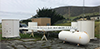
Intruments at Sugar Pine field site
Equipment at Sugar Pine site. Left to right: equipment trailer housing the radar electronics, the S-band antenna, the Parsivel Distrometer, and a heated tipping bucket rain gauge. Not shown: 10-m meteorological tower. (Photo by Clark King, NOAA)
Vertical profiling precipitation observations of major storm
Figure 1. State-of-the-art vertical profiling precipitation radar observations of a major storm that struck 2 days after the deployment of this "S-Prof" radar for the CalWater Early Start Experiment in the foothills of the Sierra Nevada Mountains of California. The data clearly show a descending upper cloud (note time increases from right to left in this display) that reaches the surface. The snow-level is indicated by the radar bright band at ~2.2 km MSL), as is the episodic decoupling between the upper cloud and the lower-altitude precipitation (note blue areas between 3.5-5.5 km MSL).
Surface meteorological observations of temperature and precipitation
Figure 2. Surface meteorological observations of temperature and precipitation at same site as the S-Prof radar data shown in Fig. 1. Note that the site received over 1 inch of rain on this date.

Advanced Linux Prototype System (ALPS) Workstations Operating in California NWS Offices


February 20, 2009

As of January 20, 2009, the Advanced Linux Prototype System (ALPS) workstations are up and running in three National Weather Service offices in California: Monterey, Sacramento, and Eureka. These systems are providing high-resolution real-time ensemble model information to forecasters over the California-Nevada domain. Additional surface and upper-air data from the HMT and operational networks are also being provided using the Meteorological Assimilation Data Ingest System (MADIS). These data sets give forecasters enhanced information to use during high-impact weather such as the recent precipitation event in California.

The operational staff will provide feedback on the ALPS system and ensemble models' performance to help direct future enhancements and refinements to the systems.

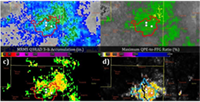
Example of ALPS Quantative Precipitation Forecast

Example of ALPS Quantative Precipitation Forecast display from the four HMT model ensemble members for February 14th. The models were developed and run by NOAA/ESRL/GSD Forecast Applications Branch.
ALPS Workstation at Monterey Forecast Office
ALPS Workstation (left display) at Monterey Forecast Office

HMT-SE Operational Needs & Requirements Workshop


February 6, 2009

The HMT Southeast Operational Needs & Requirements Workshop was held February 3-5, 2009, at the Renaissance Computing Institute (RENCI) in Chapel Hill, NC. The focus was on operational needs in order to identify gaps in hydro-meteorological services and to inform requirements for HMT-SE. The workshop engaged with forty-five participants from the NOAA National Weather Service, NOAA Research, NOAA National Ocean Service, NOAA Coastal Services Center, the North and South Carolina Sea Grant Programs, RENCI, Duke University, University of North Carolina-Chapel Hill, North Carolina State University, NASA, USGS, EPA, North CArolina Flood Plain Mapping Program, and the National Hydrologic Warning Council. Facilitation for the workshop was provided by NOAA's Southeast and Caribbean Regional Team with support from Sea Grant.

Participants had an opportunity to learn about HMT, lesson's learned from HMT-West and how HMT fits into the broader scope of water resource activities within NOAA. We were also briefed on some of the regional hydro-meteorological challenges from both a NWS and a local stakeholder's perspective. Participants then broke into smaller groups and identified five primary themes: quantitative precipitation estimates (QPE) and forecasts (QPF), hydrologic/hydrodynamic applications and models, decision support systems, and societal impacts. Teams were formed around each of these teams, and through an iterative process identified and documented a total of fifty-seven requirements. In the end, both the participants and planners alike felt that the workshop was a resounding success. A meeting report will be posted in the near future, documenting the process and the outcomes of this workshop. A second HMT-SE workshop focussed on research is being planned for later this spring, and will build on the results from the Operational Needs & Requirements Workshop.

The HMT-SE workshop was coordinated with a one-day, North Carolina Sensors Workshop on February 2nd, 2009 hosted by RENCI. The goal of this workshop was to bring local, state and federal organizations as well as universities together to make users aware of the available sensor data in the state and discuss ideas on how to assemble this data together for easier access.

Participants of HMT-SE Workshop in Feb 2009
Workshop Participants